
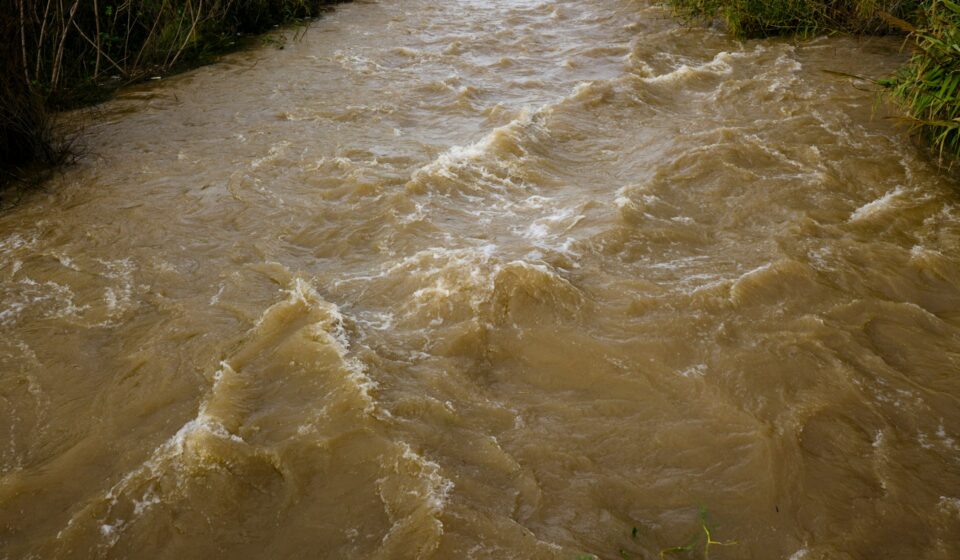
Eleven rivers overflow in five Ecuadorian provinces as El Niño rains break records in Guayaquil

Ecuador’s National Risk Management Secretariat (SNGR) reported on Thursday, October 22, 2026, that 11 rivers and streams had burst their banks in Guayas, El Oro, Los Ríos, Esmeraldas and Zamora Chinchipe, as a run of heavy rain linked to a strengthening El Niño kept hitting the coast. The official report had a cutoff of 07:00 local time.
Where the water came out
In Guayas, the SNGR listed the Balao River (Bolívar and 9 de Octubre sectors, Balao canton), the Lagarto estuary in Palestina, and the Tenguel River in the rural parish of Tenguel, which belongs to the canton of Guayaquil. In El Oro, the Pagua and Chaguana rivers overflowed in El Guabo canton. Esmeraldas had the most cases, four: the Naranjito River in Rioverde and the Sucio, Muisne and Canuto rivers in San Gregorio parish, Muisne. Los Ríos reported the San Vicente estuary in Quinsaloma, and Zamora Chinchipe the Ortega Alto creek in Yacuambi.
The report, as published by El Comercio, gave no figures for deaths or affected families in these specific floods. Separately, the SNGR’s official account said 519 rain-related events had been logged since the emergency declaration up to 23:30 on October 21, of which 147 were still open.
Guayaquil: October’s rain, many times over
The scale of the anomaly is clearest in Guayaquil. According to INAMHI data analysed by Primicias, the airport weather station recorded 112.1 mm in a single overnight event on October 18–19, roughly 19 times the city’s normal rainfall for the whole of October (5.9 mm). From October 1 to 20 the total reached 242.2 mm, already more than double the 94.4 mm measured in October 1997, during one of the strongest El Niño events on record. Guayas Prefect Carlos Encalada said parts of the province had received nearly 800 mm in 20 days.
NOAA, the US climate agency, says the current El Niño is still strengthening and is likely to be strong to very strong through January–March 2027. The largest documented events since 1950 peaked in November and December, which suggests the heaviest phase for Ecuador’s coast may still be ahead. That is a historical pattern, not a forecast for a specific city.
What INAMHI expects next
INAMHI’s warning No. 81 covered moderate to heavy rain from October 19 until 23:00 on Thursday, October 22, mainly in Esmeraldas, Santo Domingo de los Tsáchilas, Los Ríos, Guayas, El Oro and inland Manabí, and on the western slopes of the Andes, with the most intense rain possible on Thursday afternoon and night. As of Thursday morning no new national warning had confirmed heavy rain for October 23–25, but rain is not expected to stop abruptly. Risks listed include street flooding, landslides in mountain areas, falling trees and lightning.
Confirmed and pending
Confirmed: the list of 11 overflowing waterways at the 07:00 cutoff and the rainfall figures from INAMHI’s airport station. Pending: an official count of affected people and homes for these floods, and whether INAMHI will extend or replace warning No. 81.
Safety advice
- Stay away from riverbanks, ravines and unstable slopes.
- Do not cross flooded roads on foot or by vehicle.
- Report emergencies to ECU 911.
- Check INAMHI and SNGR official channels before travelling.
Featured image: illustrative photo by engin akyurt / Unsplash (Unsplash License). It does not show the rivers named in this report.
Sources
- El Comercio: Lluvias en Ecuador causan el desbordamiento de 11 ríos (October 22, 2026), citing SNGR
- Primicias: Guayaquil registra lluvias récord por segundo mes (October 21, 2026)
- Metro Ecuador: ¿Seguirán las lluvias después del 22 de octubre? (October 22, 2026), citing INAMHI
- INAMHI official portal
Celina Santa Cruz · Ecuador · Virtual editorial byline
English adaptation: Lin Wei · Editorial direction: Leonidas Ferraz · October 22, 2026 · AI-assisted writing