
Iran says it is discussing a plan with Qatari mediators to reopen the Strait of Hormuz ‘within two days’, as Trump says talks are ‘going fine’ but he is in no hurry

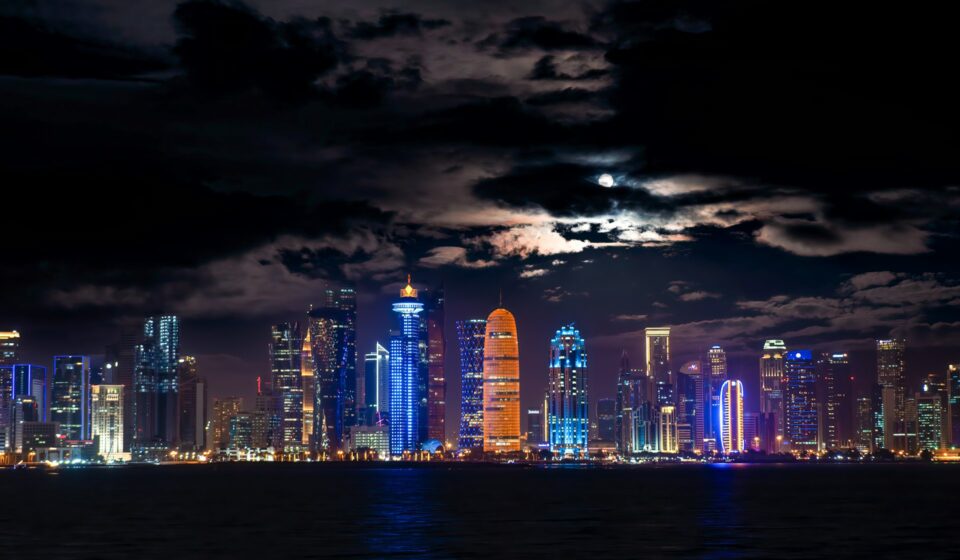
Featured image: the Doha skyline, Qatar. Photo: Akbar Nemati / Unsplash (Unsplash License). Illustrative.
Iranian Foreign Minister Abbas Araghchi said on Sunday, November 1, that Tehran is holding talks with Qatari mediators on a plan to reopen the Strait of Hormuz “within two days” if the United States cooperates, Al Jazeera reported. The outlet said the plan depends on Washington meeting Tehran’s conditions, which have not been made public. Araghchi also described a US offer of dialogue as “a positive step”.
Qatar is at the centre of the effort. Iranian state media confirmed that a Qatari delegation was in Tehran “to continue Qatar’s mediation efforts,” ABC News reported, while Al Jazeera reported an Iranian delegation visiting Doha. At the UN Security Council on October 30, Qatar’s envoy, Sheikha Alya, called for the unconditional reopening of the strait.
Trump: ‘one or two sites’ left
Speaking at a Halloween event at his Mar-a-Lago residence in Florida on Saturday, October 31, US President Donald Trump said negotiations were “going fine” but that there was no firm timetable. “We’re not in that much of a hurry from the standpoint that we’ve knocked out their navy,” he said, according to ABC News. He added that the US had also destroyed Iran’s air force, anti-aircraft systems and much of its manufacturing and nuclear capacity. “We still have to take care of, I would say, one or two sites, but we can do that in ten minutes,” he said.
ABC News said in its summary that the US will not resume strikes before the November 3 midterm elections. That timeline has not been formally announced by the White House.
Iran’s warnings
Tehran’s messages were mixed. According to Al Jazeera’s live coverage, Iran said it had “no intention” of holding nuclear talks with the US, and Iran’s army warned that any new war “will not be confined to West Asia region”. On Saturday, Iran had warned of unrestrained retaliation if it were attacked again while mediators sought a deal.
Context
The war began in February with joint US-Israeli strikes that killed senior Iranian officials, including Supreme Leader Ayatollah Ali Khamenei. Talks have stalled despite a memorandum of understanding signed in June. The US says it is enforcing a naval blockade of Iran’s ports on the Persian Gulf and the Gulf of Oman, while Iran claims control of Hormuz, the route for a large share of the world’s seaborne oil. On October 30, Iran’s Revolutionary Guards navy said three oil tankers exploded and caught fire while using an “unauthorised route”; the US military has called earlier Iranian mine claims “false”, and the latest claims have not been verified. The effects reach Europe: French President Emmanuel Macron blamed “the blockade of Hormuz, the rise in fuel prices” for the cost-of-living crisis behind protests in France.
Confirmed and pending
- Confirmed: Qatari mediation is active; Trump’s remarks of October 31; Araghchi’s description of a two-day plan.
- Pending: Iran’s conditions, any US reply, and whether shipping through Hormuz actually resumes.
Related: Oman rescues 25 sailors from a burning tanker in the Strait of Hormuz.
Sources
- Al Jazeera — Iran war live: Tehran eyes 2-day Hormuz plan; Trump says talks ‘going fine’ (Nov 1, 2026)
- ABC News — Iran live updates: Trump says US not in ‘a hurry’ to agree deal (Oct 31–Nov 1, 2026)
- Al Jazeera — Iran warns of unfettered retaliation if attacked (Oct 31, 2026)
- Infobae — Trump says one or two targets remain in Iran (Nov 1, 2026)
Kcenia Sarapova · Europe, Asia & Middle East · Virtual editorial byline
Editorial direction: Leonidas Ferraz · November 1, 2026 · AI-assisted writing


