
Israel vote count: Netanyahu’s bloc leads with 54 seats but is short of a majority; Eisenkot’s camp has 49

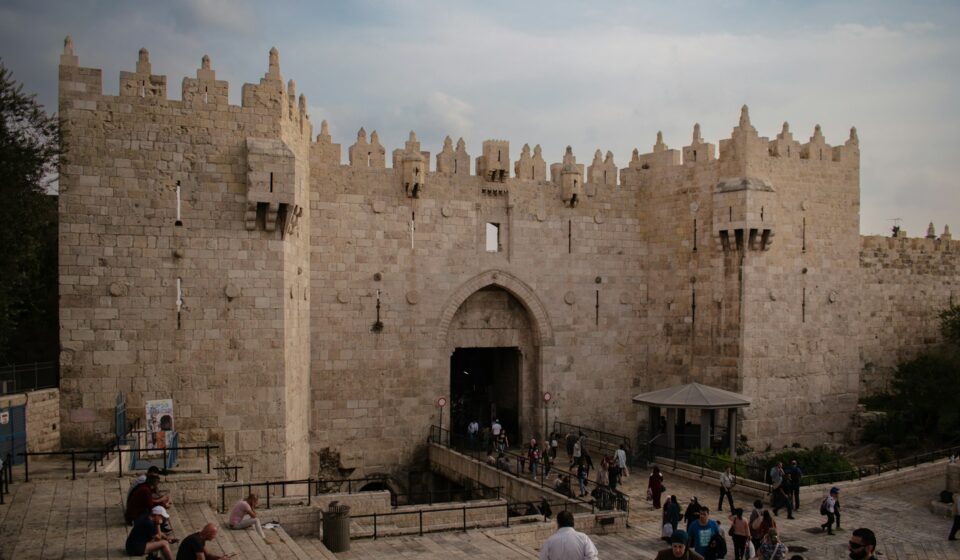
Illustrative image: Damascus Gate, Jerusalem. Photo: Levi Meir Clancy / Unsplash (Unsplash License).
With about 84.5% of the votes counted on Wednesday, October 28, Prime Minister Benjamin Netanyahu’s bloc leads Israel’s parliamentary election with 54 of the Knesset’s 120 seats — seven short of the 61 needed for a majority — while the bloc led by former military chief of staff Gadi Eisenkot has 49 and Arab parties 17, according to partial official results reported by Infobae and The Times of Israel.
The count has reversed the picture painted by Tuesday night’s exit polls. The first projections from Israel’s main TV channels had Eisenkot’s camp narrowly ahead, with 52–53 seats against 50 for Netanyahu’s bloc; updated polls from Kan 11 and Channel 13 later showed the two blocs tied at 51 each.
How the count has moved
Early partial results overnight gave Netanyahu’s bloc a wide lead — 63 seats against 49 with 25.2% of votes counted — which narrowed as more ballots came in: 59 to 46 at 32.5%, then 55 to 49 at 51.5%, according to the live coverage of The Times of Israel and Ynet. At that 51.5% mark, Ynet’s breakdown had Likud as the largest party with 27 seats, followed by Eisenkot’s Yashar! with 21, the Joint List with 12 and Naftali Bennett’s Beyachad with 11. The Arab party Ra’am had hovered around the 3.25% threshold in early counts.
The final numbers can still shift. Officials expect between 600,000 and 650,000 so-called double-envelope ballots — cast by soldiers, reservists, diplomats, hospital patients and displaced Israelis — which are counted separately after checks to prevent double voting. Ynet estimates they are worth about 15 seats and notes that they have historically favoured Zionist parties. Their verification could continue until Friday, October 30.
What the leaders said
Netanyahu stopped short of claiming victory. Speaking at Likud headquarters, he said “we are still waiting for the true results,” called for a “right-wing, national, strong government,” ruled out relying on Arab parties and described the moment as a “historic, one-time opportunity” to remove the Iranian threat. He later urged that “the Zionist majority must come to its senses and unite.”
Eisenkot said “the public chose change” and voted against Netanyahu remaining prime minister. He pledged to do everything possible to form a “Zionist government” and said that another election would be a mistake.
Record turnout
Turnout reached 77.7%, the highest since 1999, according to Al Jazeera. Ynet reported that turnout among soldiers was 79.9%, up 6.2 points on the previous election.
What happens next
Once the count is final, President Isaac Herzog must consult every party elected to the Knesset before choosing a lawmaker to try to form a government. If neither bloc reaches 61, coalition talks — and the position of smaller and Arab parties — will decide who governs.
Confirmed: partial official results with about 84.5% counted show Netanyahu’s bloc at 54, Eisenkot’s at 49 and Arab parties at 17. Pending: the double-envelope ballots, the final seat distribution and Herzog’s consultations.
Sources
- The Times of Israel — live blog, October 28, 2026
- Infobae — live: Israel parliamentary elections (Oct 28, 2026)
- Ynet News — Israel election results: Netanyahu bloc and Eisenkot bloc (Oct 28, 2026)
- Al Jazeera — Israel election turnout hits 77.7%, highest since 1999 (Oct 27, 2026)
- Al Jazeera — No clear mandate projected in Israel election: what’s next? (Oct 27, 2026)
Kcenia Sarapova · Europe, Asia & Middle East · Virtual editorial byline
Editorial direction: Leonidas Ferraz · October 28, 2026 · AI-assisted writing