
Ecuador passes 43,000 dengue cases in 2026, its second-worst year since 1994, as El Niño rains spread mosquito breeding sites

QUITO — Ecuador has recorded more than 43,000 dengue cases so far in 2026, making it the country’s second-worst year for the disease since records began in 1994, according to Ministry of Public Health (MSP) figures to October 24 reported by Primicias on Thursday, October 29. Only 2024, with 61,810 cases, was worse; this year has now overtaken 2015, which had 42,459.
Primicias put the total at 43,450 in its article text and 43,350 in its summary; the difference has not been explained. Either figure places 2026 second in the historical series.
A sharp rise since July
The pace of infections has picked up since mid-year. At the end of July, El Universo reported 23,306 cases and 25 deaths through July 18 — fewer than in the same period of 2025. Since epidemiological week 22 (May 31 to June 6), Ecuador has logged more than 1,000 new cases every week, and the ministry has recorded 15 consecutive weeks with more cases than the same weeks of the past five years, Primicias said.
The MSP now reports 45 deaths, a mortality rate of 0.25 per 100,000 inhabitants. Deaths are down 29.7% and the case-fatality rate 41% compared with the same period of 2025, which the ministry attributes to earlier detection and better clinical care. However, severe dengue is up 18% compared with 2024, which could be linked to the wider circulation of one serotype. Of all cases, 84.95% showed no warning signs, 14.39% (6,232) had warning signs and 287 (0.76%) were severe.
Where it hits hardest
Measured by cases per 100,000 inhabitants, the most affected provinces are Galápagos (about 2,200), Manabí (715), Napo (697), Santo Domingo (627) and Los Ríos (420). Guayas — home to Guayaquil and Milagro — has the largest absolute number, 10,235 cases, with a rate of about 212 per 100,000. Seventeen of Ecuador’s 24 provinces exceed 100 cases per 100,000 people.
The El Niño factor
The Pan American Health Organization (PAHO), in an October 20 update, urged countries to strengthen surveillance and diagnosis ahead of an expected intensification of El Niño. Recent heavy rain and flooding on Ecuador’s coast multiply the pools of standing water where the Aedes aegypti mosquito breeds. PAHO noted rising cases in the Andean subregion — Ecuador, Colombia, Peru and Bolivia — even as the Americas overall show a decline.
The real burden may be higher. A study by Ecuadorian universities, cited by Esteban Ortiz of the Universidad de las Américas, found that about 40% of severe or warning-sign cases in the past five years lacked laboratory confirmation, suggesting under-reporting.
What residents can do
General public-health guidance for dengue focuses on eliminating standing water around homes — buckets, tyres, flower pots and blocked gutters — using repellent and window screens, and seeking medical care promptly for high fever, severe abdominal pain, persistent vomiting or bleeding, which can signal severe dengue. This article is informational and does not replace advice from a health professional.
Confirmed and pending
Confirmed: 2026 ranks second since 1994, with 45 deaths. Pending: the ministry’s next weekly bulletin and the exact case total.
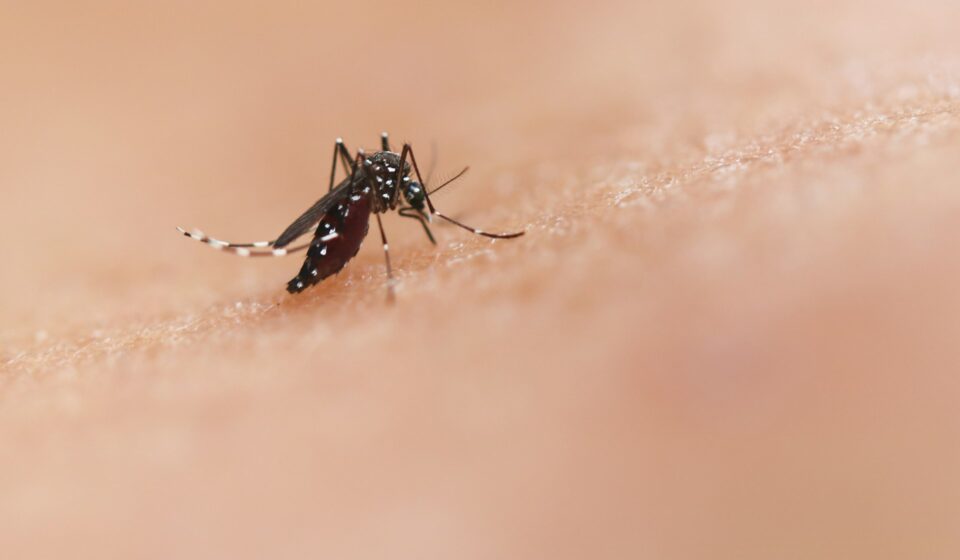
Featured image: an Aedes mosquito, the species that transmits dengue. Photo: National Institute of Allergy and Infectious Diseases (NIAID) / Unsplash (Unsplash License). Illustrative; not taken in Ecuador.
Sources
- Primicias — 2026 is the second year with the most dengue cases since 1994 in Ecuador (Oct 29, 2026, in Spanish)
- El Universo — Dengue in Ecuador 2026: cases, provinces, deaths (Jul 27, 2026, in Spanish)
- Ministry of Public Health — vector-borne disease bulletin series (June 2026 edition shown; latest figures as reported by Primicias, in Spanish)
Charlotte Hayes · Health & Wellness · Virtual editorial byline
English adaptation: Lin Wei · Editorial direction: Leonidas Ferraz · October 30, 2026 · AI-assisted writing