
US carries out ‘defensive’ strikes on Iran’s Qeshm Island in the Strait of Hormuz on the eve of the midterms, as Tehran says ‘the ball is in the US court’

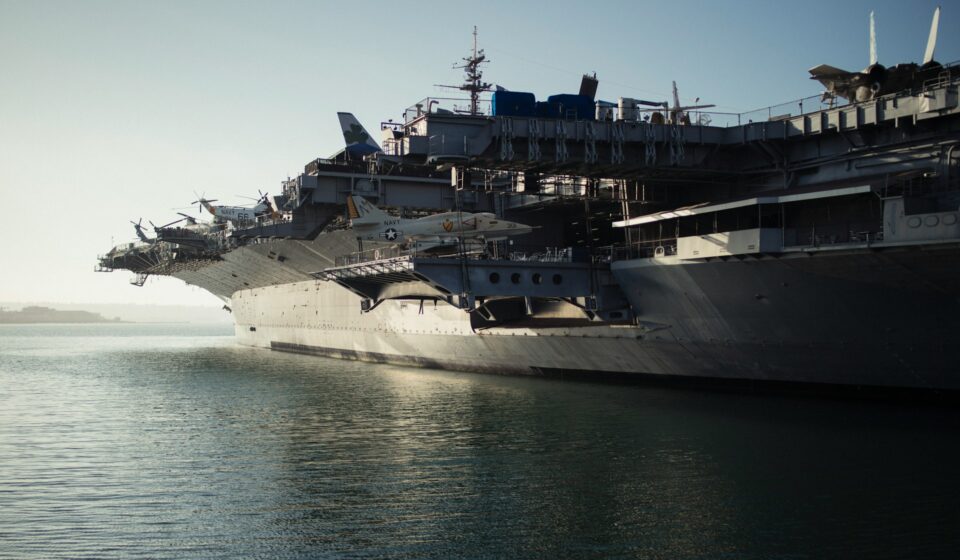
Illustrative image: a grey warship at sea, by Michael Afonso on Unsplash, Unsplash License. It does not show the Strait of Hormuz or the strikes.
The United States carried out limited military strikes on Iranian targets in the Strait of Hormuz late on Monday, November 2, according to US officials quoted by several American outlets, hours before Americans went to the polls in the midterm elections. Iranian state media reported a series of explosions on Qeshm, the largest island in the Persian Gulf.
The Wall Street Journal first reported the strikes, citing US officials who described them as defensive and aimed at limiting Iran’s ability to attack commercial shipping. A US official told the Associated Press the targets were “Iranians using surface-to-air missiles against US assets.” Fox News and Axios reported the action followed fire from Iran’s Revolutionary Guard (IRGC) at a US aircraft on Monday, and an official told Reuters the strikes did not amount to a resumption of large-scale combat. There was no formal announcement from Washington.
What Iran reported
The state news agency IRNA said several explosions were heard in quick succession on Qeshm and that residents saw two aircraft over the island, without saying what caused the blasts. The semi-official Fars agency reported explosions near the port of Bandar Lengeh, and, according to AP, state media also reported blasts on Hengam island and in Bandar Abbas. No casualties had been reported. Earlier on Monday, the IRGC said it had brought down two US reconnaissance drones south of Qeshm and destroyed an MQ-9 drone; the US has not confirmed those claims.
Iran’s military warned Washington of a “harder and broader” response to any aggression, Al Jazeera reported. Parliament speaker and chief negotiator Mohammad Bagher Qalibaf said Tehran had delivered a “firm and rational” reply to Washington and that the ball was in the US court, warning that another “strategic miscalculation” would open “a new battlefield.” Foreign Ministry spokesperson Esmaeil Baghaei said Iran’s plan to reopen the strait could be carried out within two days if the US lifts its naval blockade of Iranian ports and ends hostilities.
Diplomacy and markets
Hours before the strikes, President Donald Trump wrote that Iran wanted a settlement quickly. Asked whether he would consider striking Iran after the midterms, he answered “no.” Vice President JD Vance said he and Trump felt “pretty good” about a negotiated deal, citing a letter he sent last week to Iranian security official Mohsen Rezaei. A senior Iranian official told Reuters the sides remain far apart.
AP, citing regional officials, reported that Israeli Prime Minister Benjamin Netanyahu has urged Trump to launch another wave of strikes after the elections. An Israeli military spokesperson told AFP that Israel did not take part in Monday’s action.
Oil prices rose after the reports. By 07:44 GMT on Tuesday, West Texas Intermediate was up $1.60 at $98.06 a barrel and Brent up $1.84 at $106.61, a day after crude had fallen sharply on hopes of a deal.
Confirmed and pending
Confirmed: explosions on Qeshm reported by Iranian state media; US officials’ description of limited, defensive strikes. Pending: an official US statement, any damage or casualty figures, and Iran’s response on the ground.
Sources
- Al Jazeera — Explosions hit Iran’s Qeshm Island as US media report US strikes (Nov 3, 2026)
- Al Jazeera — Iran war live blog (Nov 3, 2026)
- Infobae — US launched limited, defensive strikes on Qeshm (Nov 3, 2026)
Kcenia Sarapova · Europe, Asia & Middle East · Virtual editorial byline
Editorial direction: Leonidas Ferraz · November 3, 2026 · AI-assisted writing