
New US entry rule now in force: every air traveller, including those flying from Quito and Guayaquil, must sign an Ebola declaration about the DR Congo

Since 11:59 p.m. (US Eastern time) on Tuesday, November 3, everyone boarding a flight to the United States must sign a declaration confirming that they have not been in the Democratic Republic of the Congo (DRC) in the previous 21 days. The order, issued by the US Centers for Disease Control and Prevention (CDC) to reduce the risk of Ebola entering the country, applies to all nationalities and all departure points, including Ecuador’s airports in Quito and Guayaquil, Primicias reported.
Who must sign, and how
According to the CDC order, the requirement covers every person on an international flight arriving in or connecting through the United States: US citizens, nationals and permanent residents included. It applies to commercial, cargo, general aviation and private aircraft, and an amended order of October 28 extended it to crew members. Passengers who merely transited through a DRC airport, even without leaving the plane, also count as having been present in the country.
The attestation can be signed on paper or digitally, including with an electronic confirmation box, depending on the airline. Parents, guardians or other authorised adults can sign for minors or people unable to sign. The 21-day period, which matches the maximum incubation period for Ebola, starts the day after leaving the DRC; travellers from there may board no earlier than day 22.
What airlines must do
Airlines must confirm, at or shortly before boarding, that every passenger has completed the declaration, and must deny boarding to anyone who has not, unless the US government has granted an exemption. They must keep each attestation for at least 42 days after arrival and hand it to US authorities on request. The CDC says exemptions are rare and limited to authorised medical transport of Ebola patients and individual cases approved for humanitarian or other important government reasons.
Knowingly false statements can be prosecuted under US federal law (18 U.S.C. § 1001), which carries fines and prison terms. Airline industry groups had asked the CDC to reconsider the requirement ahead of the November 3 deadline, according to reports from late October.
How worried should travellers be?
The CDC stresses that “the overall risk to the American public and travelers remains low”. For the vast majority of passengers from Ecuador, who have not been in the DRC, the change means one extra step at check-in or the gate. Travellers are advised to arrive with enough time, check their airline’s instructions in advance and answer the declaration truthfully. Neither the CDC page nor Primicias gave current case figures for the outbreak in the DRC.
Confirmed and pending
Confirmed: the start date, scope and penalties, from the CDC order. Pending: an end date for the measure, which the CDC has not set, and how each airline will collect the forms.
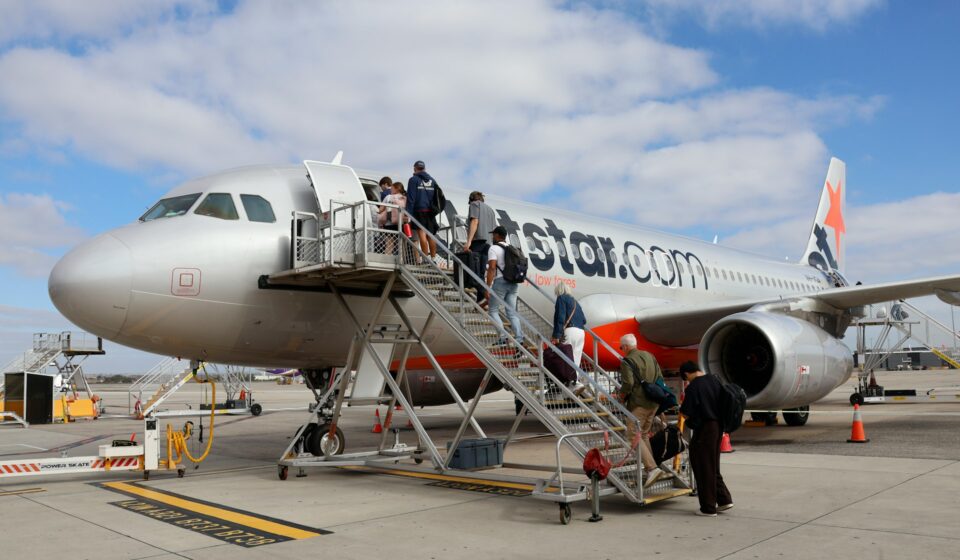
Featured image: passengers boarding an aircraft. Photo by You Le on Unsplash (Unsplash License). Illustrative image.
Sources
- CDC: Order requiring attestation for all airline or other aircraft passengers arriving in the United States
- Primicias: the new requirement for travel to the United States from November 3 (Spanish)
- TimesLIVE: Airline groups urge US CDC to reconsider Ebola declaration requirements
Charlotte Hayes · Health & Wellness · Virtual editorial byline
Editorial direction: Leonidas Ferraz · November 4, 2026 · AI-assisted writing