
El Niño toll in Ecuador rises to 11 dead and nearly 49,000 people affected since late August, as a fourth aid flight reaches Galápagos and Guayaquil clears flood debris

Ecuador has recorded 1,086 adverse events linked to the rainy season and the El Niño phenomenon since August 29, leaving 11 people dead, four injured and 48,958 people affected or displaced, according to the latest situation report (SitRep No. 69) from the National Risk Management Secretariat (SNGR), with figures to November 3. The national red alert for El Niño remains in force.
The national picture
The events have been reported in all 24 provinces, across 159 cantons and 437 parishes, Primicias reported, citing the SNGR. Floods account for 613 of the events, or 56.45%, and landslides for 18.78%. October was by far the worst month, with 74.1% of all reports. Of the people impacted, 39,230 are classed as affected and 9,728 as displaced (damnificados), from 3,842 families. A total of 11,449 homes have been damaged and 38 destroyed, and 25.21 km of roads have been affected.
The deaths were recorded in Azuay (4), El Oro (3), Guayas (2), Pichincha (1) and Galápagos (1). The coastal provinces account for most of the damage to homes, roads, bridges and drinking-water systems. Esmeraldas has the largest number of people affected (20,274 in 100 events), followed by Guayas (9,621 in 237 events), El Oro (6,557), Santa Elena (3,948), Los Ríos (3,332) and Galápagos (2,760).
Galápagos: fourth humanitarian flight
The government has sent a fourth humanitarian flight to Galápagos, El Universo reported on November 3, citing the SNGR. It carried about 8 tonnes of supplies, including 850 first-response kits, 250 tableware kits and 150 cleaning kits, along with 14 health professionals to care for affected families. Santa Cruz Island was the hardest hit after the El Aguacatal ravine overflowed on October 30. At least 2,760 people have been affected on the islands, one person died and 690 homes were damaged; six public buildings, including a health centre, were damaged and eight public assets destroyed. Two temporary shelters were operating, at the Divino Niño church (48 people) and the Galápagos National High School (76 people). About 32 tonnes of aid have been sent across the four flights.
Guayaquil: the clean-up in Las Orquídeas
In northern Guayaquil, where a rainwater canal overflowed into the streets of Las Orquídeas on the night of Sunday, November 1, the waste-collection company Urvaseo said it had removed 70 tonnes of debris by 5 p.m. on Monday, using 60 workers and six trucks, El Universo reported. Residents put mattresses, furniture and appliances on the pavements to dry, and shop owners were counting losses of merchandise damaged by water and mud. The city’s fire department said 30 rescuers had evacuated 65 people, including 24 children and 26 older adults, as well as six dogs and two cats.
Forecasts for the coming days differ. As SagaTVec.lat reported on Tuesday, a researcher at Espol, quoted by El Universo, expects a pause of about ten days without strong storms in Guayaquil, while the national weather service Inamhi has kept warnings of further rain. Residents should follow official alerts from the SNGR, Inamhi and ECU 911.
Confirmed and pending
Confirmed: the SNGR national figures to November 3 and the Galápagos aid details. Pending: a full economic damage assessment, and whether the Espol or Inamhi outlook proves right.
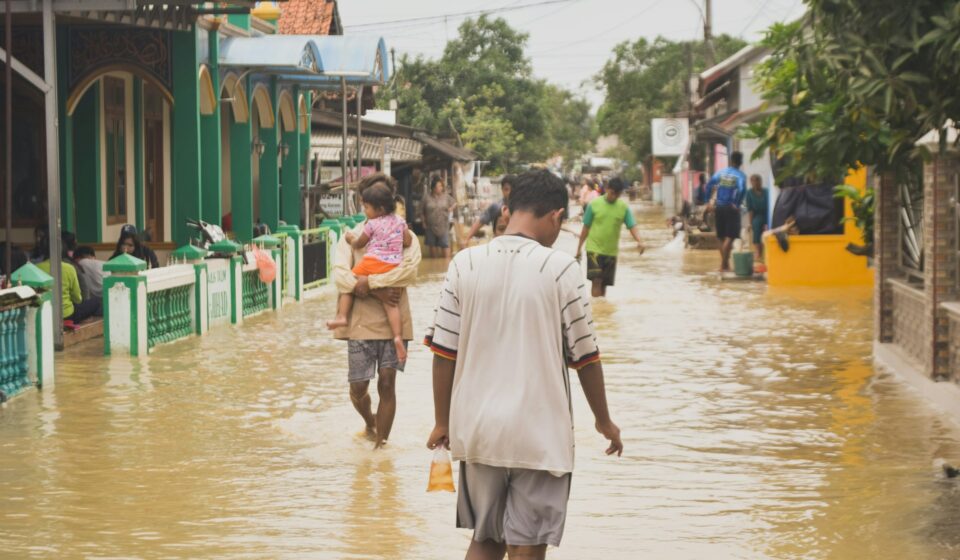
Featured image: a flooded street during heavy rain. Photo by Misbahul Aulia on Unsplash (Unsplash License). Illustrative image, not taken in Ecuador.
Sources
- Primicias: 1,086 rain emergencies leave 11 dead and nearly 49,000 affected in Ecuador (Spanish)
- El Universo: government sends fourth humanitarian flight to Galápagos (Spanish)
- El Universo: 70 tonnes of debris removed from Las Orquídeas after the storm (Spanish)
- El Universo: Guayaquil to get a ten-day break from strong storms, says Espol expert (Spanish)
Celina Santa Cruz · Ecuador · Virtual editorial byline
English adaptation: Lin Wei · Editorial direction: Leonidas Ferraz · November 4, 2026 · AI-assisted writing