
Serbia votes in snap election as Vucic’s party faces a student movement born from the Novi Sad tragedy

Serbians are voting on Sunday, October 25, in a snap parliamentary election that pits the ruling Serbian Progressive Party (SNS) of Aleksandar Vucic against a list backed by the student movement that has led nearly two years of anti-corruption protests.
Polling stations opened at 7 a.m. local time (06:00 GMT) and close at 8 p.m. (19:00 GMT). First indications of the results are expected about two hours after polls close, Al Jazeera reported. Voters are electing the 250-seat National Assembly.
Who is running
Vucic has dominated Serbian politics for more than a decade as prime minister and then president, and his party has governed for 14 years, according to the Associated Press. He resigned as president in September, when the early election was called, in order to run for prime minister. His campaign promises higher pensions and public-sector salaries, more investment in state healthcare and subsidies for young couples.
The challenger is the Students’ List, a roster of 250 largely unfamiliar candidates that includes university professors, teachers, actors, athletes and farmers. Al Jazeera reports that the list is headed by cardiologist Ilija Srdanovic, while the AP notes that the movement says it has no single leader and takes decisions through assemblies at universities across the country. Its programme centres on fighting corruption and improving education.
A tight race
An Ipsos poll published on Thursday gave the SNS 47% and the Students’ List 40%, while other surveys have put the students ahead. On Thursday, about 150,000 supporters of the movement rallied in central Belgrade, according to Al Jazeera.
Turnout could be decisive. Jelena Vasiljevic, a senior research associate at the University of Belgrade’s Institute for Philosophy and Social Theory, told Al Jazeera that “the political dynamic has changed from the ground up”, and that the students need to mobilise habitual non-voters and the undecided as well as unite opposition voters.
Where the protests came from
The movement began after the concrete canopy of the railway station in Novi Sad collapsed in November 2024, killing 16 people. The disaster was widely blamed on corruption in public works, and student-led demonstrations have continued since, eventually bringing down the government.
Rights groups say repression has increased since the collapse. Vucic and his party deny accusations of repression, corruption and spying on opponents, and Vucic has claimed that the students are funded by foreign agents in Croatia and Montenegro, which the students deny. The SNS has also faced accusations of electoral irregularities, including vote-buying and inflated voter rolls, which it rejects.
International monitors and the European Union have voiced concern about whether the vote will be safe and fair. Analysts quoted by the AP fear both sides could claim victory. Serbia, a candidate for EU membership, has balanced ties with Russia and China, and its relations with Brussels have frayed over a lack of reforms on the judiciary and the rule of law.
Confirmed and pending
Confirmed: voting is under way, with polls closing at 8 p.m. local time. Pending: turnout figures and the first results, expected late on Sunday evening in Europe.
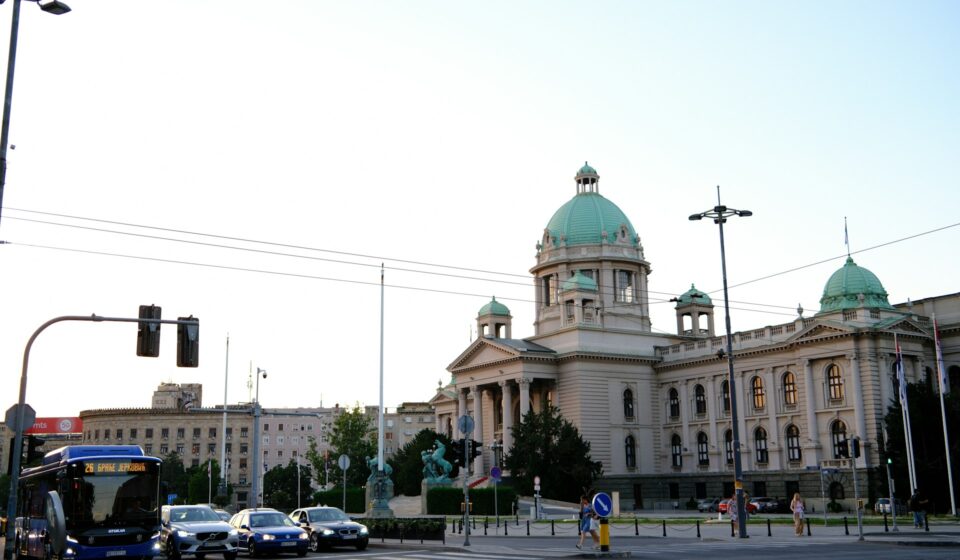
Image: the National Assembly building in Belgrade. Photo by Anton Borzenkov on Unsplash (Unsplash License). Illustrative; not taken on election day.
Sources
- Al Jazeera — Serbia votes in election pitting longtime leader against student movement (Oct 25, 2026)
- Associated Press via La Nación — From protests to election, Serbia’s students mount a challenge to Vucic (Oct 19, 2026)
Kcenia Sarapova · Europe, Asia & Middle East · Virtual editorial byline
Editorial direction: Leonidas Ferraz · October 25, 2026 · AI-assisted writing